


Top Platforms for Warehouse Automation: Your Practical, No-Nonsense Field Guide

Chosen theme: Top Platforms for Warehouse Automation. Dive into a friendly, real-world tour of leading software and orchestration solutions shaping modern fulfillment. Learn what matters, avoid hype, and share your experiences so we all improve together.

WMS, WES, WCS: Know the Layers
Top platforms span Warehouse Management Systems, Execution Systems, and Control layers. Understanding where each platform operates helps you avoid overlaps, budget smarter, and design integrations that won’t unravel under peak-season pressure.
Integration-First Architecture
Modern leaders prioritize open APIs, event streams, and prebuilt connectors. That means faster onboarding of robots, scales, vision systems, and carriers—and fewer midnight calls when a change request ripples across multiple dependent processes.
Time-to-Value and Total Cost of Ownership
Great features matter, but sustained impact matters more. Evaluate implementation speed, upgrade cadence, training footprint, and maintenance effort. Share your go-live timelines in the comments to help others benchmark expectations realistically.

Robotics Orchestration: Managing Mixed Fleets with Grace

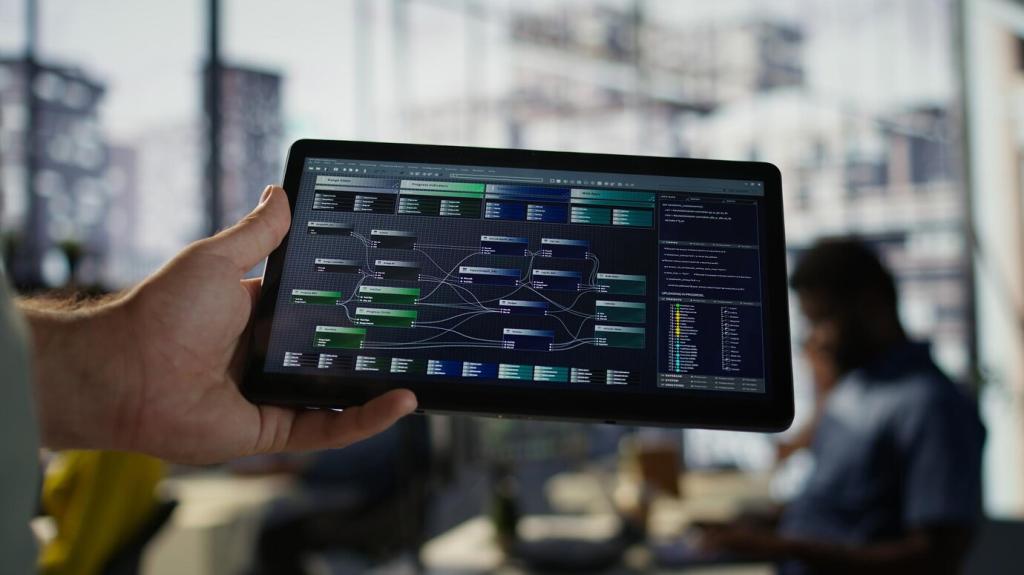
Top orchestration layers align missions across different robot brands and fixed automation. They track queues, locations, and charge levels, balancing throughput with safety while surfacing transparent exceptions that supervisors can resolve quickly.

Robotics Orchestration: Managing Mixed Fleets with Grace

Connector ecosystems simplify onboarding of new robots, scanners, or vision tools. Event-driven designs allow fast routing decisions, while standard payloads reduce brittle custom code that often breaks when device firmware quietly changes.

Robotics Orchestration: Managing Mixed Fleets with Grace

During a carrier cut-off crunch, an ops lead reweighted missions toward urgent orders. The platform rerouted AMRs, prioritized induct lines, and cleared the backlog with minutes to spare. Post your best orchestration win below.

Robotics Orchestration: Managing Mixed Fleets with Grace

Lorem ipsum dolor sit amet, consectetur adipiscing elit. Ut elit tellus, luctus nec ullamcorper mattis, pulvinar dapibus leo.

AS/RS and Goods-to-Person Suites: Software That Moves More Than Steel

Top suites translate inventory policy into smart retrieval, batching, and tote routing. They minimize dwell time, reduce touches, and keep pick stations fed so human and robotic workflows deliver consistent, predictable throughput.

Data, AI, and Digital Twins Inside Top Platforms

Machine learning models anticipate order mix, travel time, and station saturation. Leaders turn those predictions into schedules and task queues that hit carrier cutoffs without overstaffing, even when promotions distort historical patterns.

Readiness Checklist that Saves Weeks

Document data sources, master data gaps, device inventory, carrier labels, and safety constraints. Map current-state flows honestly. The best platform won’t compensate for missing truths about inventory accuracy or uneven process discipline.

Pilot First, Then Scale with Confidence

Define crisp success metrics—lines per hour, touches per unit, error rates, and overtime. Run a limited-scope pilot, measure relentlessly, and only then expand. Celebrate quick wins publicly to build momentum across shifts.

Change Management People Actually Feel

A supervisor once brought night-shift leaders into design sessions, not just training. Adoption soared because workers saw their fingerprints in workflows. Invite your team into decisions, and tell us how you keep trust high.
Daybydayupdates
Privacy Overview

This website uses cookies so that we can provide you with the best user experience possible. Cookie information is stored in your browser and performs functions such as recognising you when you return to our website and helping our team to understand which sections of the website you find most interesting and useful.